Eden Schmidt · 18 September 2026
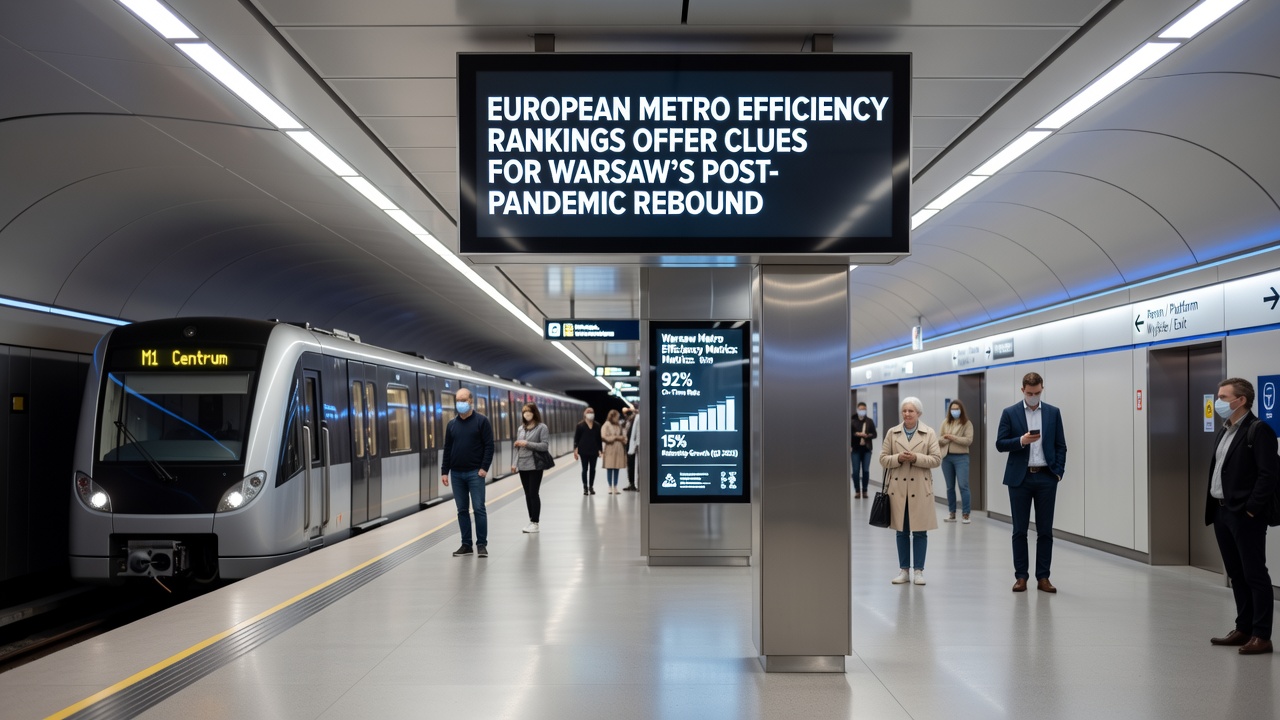
European Metro Efficiency Data Sheds Light on Warsaw's Pandemic Recovery Path
European cities have long tracked metro performance through standardized metrics that cover speed, capacity, energy use, and passenger satisfaction, and these datasets now serve as reference points for Warsaw as the city adjusts operations following pandemic disruptions. Data compiled by transport authorities across the continent reveal patterns in ridership recovery, fleet utilization, and infrastructure maintenance that directly apply to Warsaw's network expansion and service adjustments planned through 2026.
Key Efficiency Indicators Across Major Systems
Paris, Madrid, and Berlin maintain detailed annual reports on average train intervals, energy consumption per passenger-kilometer, and station accessibility upgrades, while Warsaw's Metro Warszawskie has begun aligning its own measurements with these benchmarks to identify gaps in post-pandemic scheduling. Researchers at the European Transport Research Institute have documented how systems that reduced headways during peak hours achieved faster ridership rebounds than those maintaining pre-2020 frequencies, and Warsaw operators have reviewed these findings ahead of service changes expected in September 2026.
Capacity utilization rates tell another part of the story. Madrid Metro reported 78 percent average load factors in 2025 after implementing dynamic pricing during off-peak periods, whereas Warsaw continues to evaluate similar tools to balance demand on its two existing lines and the third line under construction. Studies from the University of Amsterdam's urban mobility group indicate that cities integrating real-time occupancy data into passenger apps saw reduced crowding complaints and steadier recovery curves, prompting Warsaw planners to accelerate similar digital integrations.
Lessons from Recovery Patterns in Comparable Cities
Stockholm and Vienna provide additional reference points because their metro networks share scale characteristics with Warsaw. Stockholm's system restored 92 percent of pre-pandemic passenger volumes by mid-2025 through targeted evening service increases and improved connections to suburban rail, and Vienna achieved comparable results after expanding contactless payment options across all stations. Warsaw's transport department has examined these outcomes while preparing timetable revisions that incorporate more frequent late-night runs on Line 1 and Line 2.

Energy efficiency rankings compiled by the International Association of Public Transport place Copenhagen and Zurich at the top due to regenerative braking systems and LED retrofits that cut consumption by up to 25 percent, and Warsaw has begun piloting comparable upgrades on its newest rolling stock. Observers note that these technical improvements also support broader environmental targets set by the European Union for urban transport networks through 2030.
Application to Warsaw's Infrastructure Timeline
Warsaw's ongoing extension of Line 3 toward the eastern districts aligns with strategies used in Barcelona, where phased openings allowed operators to test demand before full service launch. According to reports from the Polish Ministry of Infrastructure, construction milestones scheduled for completion in 2026 will add six new stations and increase daily capacity by approximately 120,000 passengers. Efficiency data from other capitals suggests that early integration of platform screen doors and advanced signaling can reduce dwell times by 12 to 15 seconds per stop, directly improving overall line throughput.
Passenger behavior studies conducted after 2022 show that systems offering reliable information on crowding levels retained higher shares of choice riders who shifted to remote work during lockdowns. Warsaw has therefore prioritized mobile app enhancements that display live occupancy figures, following models already operational in Amsterdam and Oslo.
Conclusion
European metro efficiency rankings continue to supply Warsaw with measurable reference points for scheduling, energy management, and infrastructure sequencing as the city moves further into its post-pandemic recovery phase. By cross-referencing performance data from multiple capitals, transport authorities in Poland gain concrete benchmarks for the service adjustments and capital investments that will shape operations through September 2026 and beyond.