Casey Lange · 16 October 2026
Signaling Trials on Core Lines Prompt Fresh Platform Safety Reviews Across Interchange Points
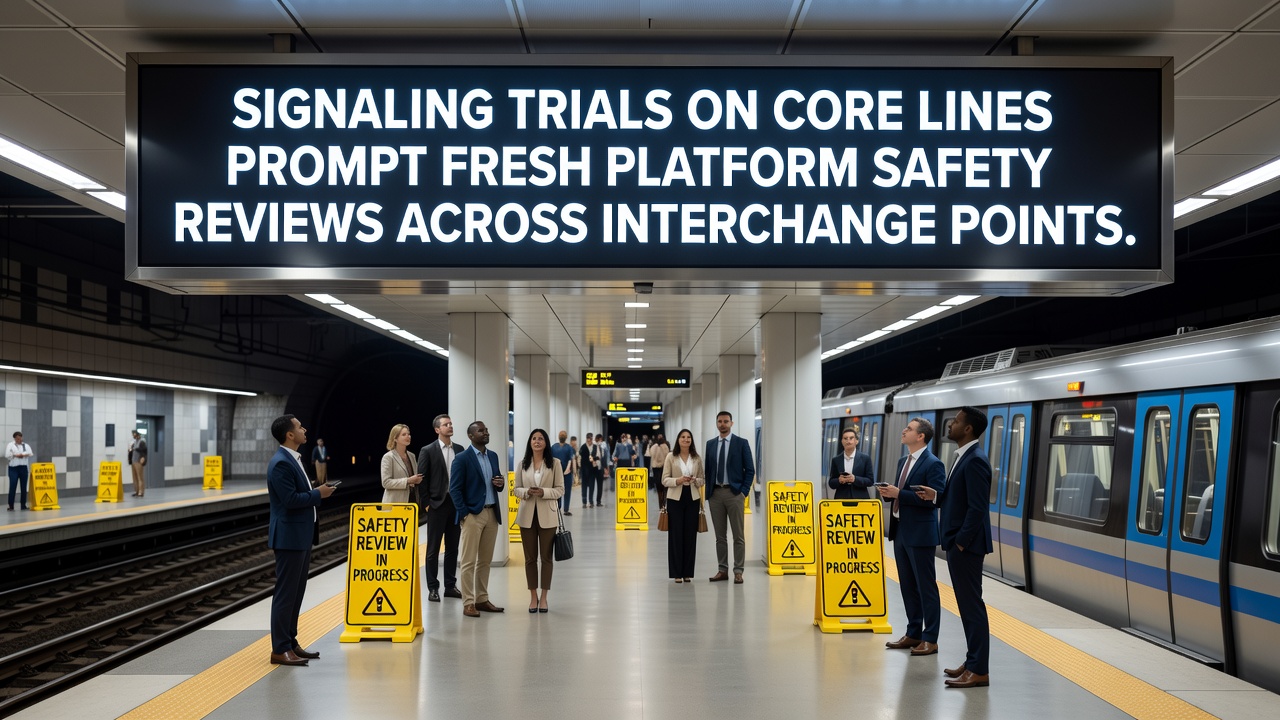
Signaling trials on core rail lines have triggered new platform safety assessments at multiple interchange stations, as transport authorities examine how updated control systems interact with passenger flow patterns and infrastructure layouts. These evaluations focus on lines that carry high volumes of daily commuters, where even minor adjustments to train spacing and braking profiles can influence dwell times and platform edge conditions.
Background on Recent Signaling Initiatives
Core line upgrades involve the installation of modern signaling technology designed to increase capacity and reduce headways between trains. Operators have rolled out these systems in phases since early 2025, with full-scale trials set to expand in October 2026 across key corridors that connect suburban and central networks. Data from the European Union Agency for Railways shows that similar signaling projects in other regions have improved punctuality by up to 12 percent once stabilized, yet they also require re-examination of platform operations to maintain safety margins.
Interchange points present particular challenges because they combine high passenger volumes with frequent train movements from multiple directions. Reviews now underway assess whether revised signal timing affects the time available for boarding and alighting, especially during peak periods when crowding extends close to platform edges.
Scope of the Platform Safety Reviews
Authorities have directed operators to inspect physical infrastructure, lighting, signage, and crowd management procedures at each interchange. The reviews examine how new automatic train control features alter approach speeds and stopping accuracy, which in turn influences the gap between train and platform as well as the duration doors remain open. Engineers collect real-time data on passenger movement using sensors and video analysis to identify any emerging risk patterns.
One study conducted at a major European interchange revealed that a two-second reduction in average dwell time correlated with a measurable decrease in near-edge incidents when combined with updated announcements and floor markings. Transport Canada officials have published comparable findings from their own corridor trials, noting that platform edge tactile strips and automated announcements require recalibration after signaling changes take effect.
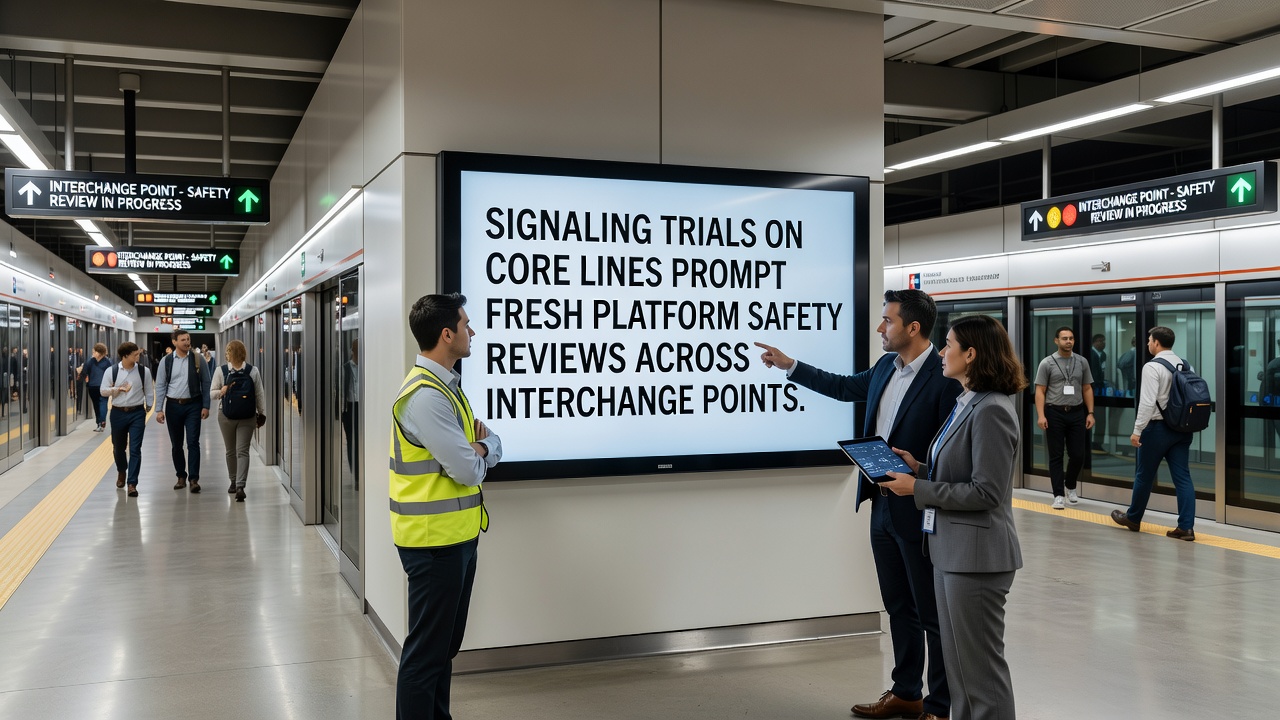
Reviews also cover emergency evacuation routes and the placement of staff during trial periods. Because signaling trials sometimes include simulated fault scenarios, operators test whether platform supervisors receive timely alerts when trains experience delayed departures or unexpected stops. Coordination between signaling control centers and station teams forms a central element of the updated procedures.
Stakeholder Involvement and Data Collection
Multiple agencies participate in the reviews, including infrastructure managers, train operators, and independent safety auditors. Joint working groups meet monthly to compare findings across different interchange sites. Data collection covers both quantitative metrics such as passenger density per square meter and qualitative observations from station staff who monitor real-time conditions during trial windows.
Researchers at several universities have contributed analysis tools that model crowd behavior under varying train frequencies. Their models incorporate variables such as transfer volumes between lines, time of day, and special event schedules. Findings feed directly into recommendations for temporary barriers, adjusted lighting levels, or revised public address scripts that operators can activate if needed during the October 2026 trial expansion.
Industry organizations including the International Association of Public Transport have circulated guidance documents summarizing lessons from earlier signaling rollouts in Australia and North America. These resources highlight the value of early engagement with accessibility groups to ensure that any platform modifications accommodate users with mobility or sensory impairments.
Timeline and Next Steps
Initial review reports are due by the end of the current quarter, with follow-up inspections scheduled after the October 2026 signaling trials begin. Operators plan to publish aggregated safety performance indicators on a quarterly basis so that external observers can track trends. Any required infrastructure adjustments, such as repositioning of platform furniture or enhancements to wayfinding systems, will be prioritized according to risk rankings established during the assessments.
Training programs for station personnel now include modules on the new signaling environment and its implications for crowd management. Simulation exercises allow staff to practice responses to scenarios where train movements deviate from standard patterns because of trial conditions.
Conclusion
Signaling trials on core lines continue to drive systematic reviews of platform safety at interchange points, with authorities focusing on data-driven adjustments to infrastructure and operations. The process integrates input from regulatory bodies, research institutions, and operational teams to maintain safety standards while capacity improvements take hold. Ongoing monitoring through October 2026 and beyond will determine whether additional measures become necessary at specific locations.